- myFICO® Forums
- Types of Credit
- Credit Cards
- Fidelity Rewards Visa / Elan CLD – Recent CLD afte...
Options
- Subscribe to RSS Feed
- Mark Topic as New
- Mark Topic as Read
- Float this Topic for Current User
- Bookmark
- Subscribe
- Mute
- Printer Friendly Page
Turn on suggestions
Auto-suggest helps you quickly narrow down your search results by suggesting possible matches as you type.
Showing results for
Fidelity Rewards Visa / Elan CLD – Recent CLD after prior APR hike (Aug 2026)

Is your credit card giving you the perks you want?
Browse credit cards from a variety of issuers to see if there's a better card for you.

- Mark as New
- Bookmark
- Subscribe
- Mute
- Subscribe to RSS Feed
- Permalink
- Report Inappropriate Content
08-12-2026
12:26 PM
08-12-2026
12:26 PM
Fidelity Rewards Visa / Elan CLD – Recent CLD after prior APR hike (Aug 2026)
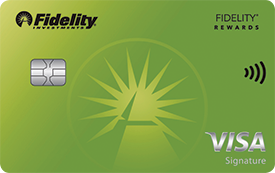
Figured I’d post this as an FYI/data point since I haven’t found much recent discussion here around Fidelity Rewards Visa / Elan credit line decreases.
I previously posted in May about my experience trying to get the APR reduced on this card after they raised my APR based on a January credit report pull, so this is somewhat of a follow-up to that thread.
Earlier this year, I had a fairly significant balance on the Fidelity Visa and paid that down, along with roughly $20K in overall credit card debt, in March. Since then, my overall credit profile has improved, and my usage of the Fidelity card dropped quite a bit, but overall usage has climbed up a bit, still under 30% utilization across all three bureaus.
More recently, Elan significantly reduced my credit line, leaving me with only around $120 in available credit after the decrease. The account is still carrying a balance and generating roughly $115/month in interest, so this wasn't simply a dormant zero-balance card that hadn't been touched in years.
I called Elan after the CLD to see what options I had. The representative initially attempted to get me over to underwriting, but I ultimately ended up back with customer service and never actually spoke with an underwriter.
The CSR recommended that I wait for the letter explaining the reason for the credit line decrease, which I haven't received yet. Once I have that, she suggested calling back and potentially requesting a CLI/reconsideration using my updated household income. My wife recently started a new job, so our current household income is higher than what Elan previously had on file.
So at this point the story isn't necessarily finished. I'm going to wait for the letter, see exactly what reason Elan provides, and then decide how to approach the CLI/reconsideration.
I'm not really posting looking for answers — mostly wanted to put a recent Fidelity/Elan CLD data point out there since I couldn't find much current information when I searched.
Interestingly, I did come across a recent Citi CLD thread while looking around the forums. A few members there reported Citi reducing limits on relatively high-limit cards that weren't getting much usage. Obviously that's a different issuer, but it did make me wonder whether banks are becoming a little more aggressive about reducing unused or underused credit exposure.
If anyone else has had a recent Fidelity/Elan CLD, though, I'd definitely be interested in hearing the circumstances and what happened afterward.
I'll update this thread once the Elan letter arrives and again after I call them back.
Ch 13 Filed - Apr 02, 2018
Last CH 13 Payment Made - March 10th, 2023
Discharged - 5/16/23
FICO 8 Scores as of
1/28/26
EQ - 686
TU - 684
EX - 680








Last CH 13 Payment Made - March 10th, 2023
Discharged - 5/16/23
FICO 8 Scores as of
1/28/26
EQ - 686
TU - 684
EX - 680
Labels:
Message 1 of 15
14 REPLIES 14

- Mark as New
- Bookmark
- Subscribe
- Mute
- Subscribe to RSS Feed
- Permalink
- Report Inappropriate Content
08-12-2026
05:06 PM
08-12-2026
05:06 PM
Re: Fidelity Rewards Visa / Elan CLD – Recent CLD after prior APR hike (Aug 2026)
This issue with carrying balances and paying high interest rate charges defeats the whole idea of attaining CC's for the best rewards. It just doesn't work in so many ways, from retaining CL's, keeping llines open, to opening new ones.
You will have much more success treating credit lines as a safer means over cash, while getting rewarded. All these issues go away if you just PIF every statement balance. APR becomes meaningless . Live within your means. Build a cushion, don't live day to day like most of the general public does.
Then come back with data points that most here can find relative. Otherwise we just have to conclude that all your issues stems from poor practices.
BofA: 
 Citi:
Citi:
 US Bank:
 Chase:
 Aven:
Aven: RH:
RH:
Citi:US Bank:Chase:Aven:RH:Spend: Less than 10k per year organic (frugal). MS varies, can be more significant.
(Oct of 26) Scorecard: Clean, Thick, Mature (Always PIF)
HP's: EQ 1/6, 2/12, 5/24 | TU 0/6, 3/12, 5/24 | EX 0/6, 2/12, 6/24
New Accounts: 1/6, 7/12, 9/24
Message 2 of 15
- Mark as New
- Bookmark
- Subscribe
- Mute
- Subscribe to RSS Feed
- Permalink
- Report Inappropriate Content
08-12-2026
05:29 PM
08-12-2026
05:29 PM
Re: Fidelity Rewards Visa / Elan CLD – Recent CLD after prior APR hike (Aug 2026)
I mean yeah if everyone could PIF credit card companies would go out of business. I have a set of PIF and others that aren't and life gets in the way of ideology but appreciate that you took the time to provide your input.
Also what are "meaningful data points" to you?
Ch 13 Filed - Apr 02, 2018
Last CH 13 Payment Made - March 10th, 2023
Discharged - 5/16/23
FICO 8 Scores as of
1/28/26
EQ - 686
TU - 684
EX - 680
Last CH 13 Payment Made - March 10th, 2023
Discharged - 5/16/23
FICO 8 Scores as of
1/28/26
EQ - 686
TU - 684
EX - 680
Message 3 of 15
0
Kudos
- Mark as New
- Bookmark
- Subscribe
- Mute
- Subscribe to RSS Feed
- Permalink
- Report Inappropriate Content
08-12-2026
05:58 PM
08-12-2026
05:58 PM
Re: Fidelity Rewards Visa / Elan CLD – Recent CLD after prior APR hike (Aug 2026)
@cabledude27 wrote:I mean yeah if everyone could PIF credit card companies would go out of business. I have a set of PIF and others that aren't and life gets in the way of ideology but appreciate that you took the time to provide your input.
Also what are "meaningful data points" to you?
That's the point, let everyone else do it wrong, while we take the advantage of rewards above issuer processing returns by doing it right. It's definitely a way of life.
Meaningful data points are those, once you are PIFing, then we can get down to how specific issuer actions are not from poor financial practices.
Myself, I am more interested in profile data points at the point of attaining new credit. How different issuers look at ones profile in making their decisions. But if your not doing the basics right, like PIFing, then I can't conclude anything from ones data points, without concluding ones profile habits have become the main factor. Thus not relavant to my own.
BofA: Citi:US Bank:Chase:Aven:RH:
Citi:US Bank:Chase:Aven:RH:Spend: Less than 10k per year organic (frugal). MS varies, can be more significant.
(Oct of 26) Scorecard: Clean, Thick, Mature (Always PIF)
HP's: EQ 1/6, 2/12, 5/24 | TU 0/6, 3/12, 5/24 | EX 0/6, 2/12, 6/24
New Accounts: 1/6, 7/12, 9/24
Message 4 of 15
- Mark as New
- Bookmark
- Subscribe
- Mute
- Subscribe to RSS Feed
- Permalink
- Report Inappropriate Content
08-12-2026
07:21 PM
08-12-2026
07:21 PM
Re: Fidelity Rewards Visa / Elan CLD – Recent CLD after prior APR hike (Aug 2026)
Fair enough - sounds like we're looking for different kinds of data points.
My intent with the thread is simply to document a recent Elan/Fidelity CLD and what happens next, including the stated reason when the letter arrives and whether reconsideration or a CLI is available. Someone doesn't have to share my exact profile or payment habits for that issuer-specific information to be useful.
I'm not presenting my situation as a controlled experiment or claiming the CLD was unrelated to my balances. I'm just adding a current data point because there didn't seem to be much recent Fidelity/Elan CLD information here.
Ch 13 Filed - Apr 02, 2018
Last CH 13 Payment Made - March 10th, 2023
Discharged - 5/16/23
FICO 8 Scores as of
1/28/26
EQ - 686
TU - 684
EX - 680
Last CH 13 Payment Made - March 10th, 2023
Discharged - 5/16/23
FICO 8 Scores as of
1/28/26
EQ - 686
TU - 684
EX - 680
Message 5 of 15

- Mark as New
- Bookmark
- Subscribe
- Mute
- Subscribe to RSS Feed
- Permalink
- Report Inappropriate Content
08-12-2026
10:03 PM
08-12-2026
10:03 PM
Re: Fidelity Rewards Visa / Elan CLD – Recent CLD after prior APR hike (Aug 2026)
Beware. One issuer giving you a CLD for high utilization, further driving up your utilization, can cause a domino effect of CLDs. I suggest trying to pay off down your balances ASAP. If you want to preserve your credit limits as much as possible, target the cards with the highest percentage used. Get each card down under the individual thresholds. These are roughly 90%, 70%, 50%, 30%, and 10%. So if you have one at 70%, pay that one down to 50% then go to the next highest threshold, etc. If these balances are costing you interest though, it may be worth accepting potential CLDs and paying them down in order of highest to lowest interest instead. You can always rebuild later.
As for getting your credit limit back, I wouldn't bet on it happening any time soon. Elan (US Bank) is extremely conservative at the best of times but when they sniff risk, that's just going to make it worse.
9/1/2026
EX8 787
EQ8 793
TU8 789
19 cards TCL $237,750 ACL $12,513
EX8 787
EQ8 793
TU8 789
19 cards TCL $237,750 ACL $12,513
Message 6 of 15

- Mark as New
- Bookmark
- Subscribe
- Mute
- Subscribe to RSS Feed
- Permalink
- Report Inappropriate Content
08-13-2026
03:38 AM
08-13-2026
03:38 AM
Re: Fidelity Rewards Visa / Elan CLD – Recent CLD after prior APR hike (Aug 2026)
@cabledude27 I think what you're running into is that PIF is basically the unofficial baseline for a lot of people on this board. There are a lot of members here who always PIF, and that's perfectly fine, but it also means that a data point involving high utilization and carried balances may not be particularly relevant to them.
That's really what I think @ElvisCaprice was getting at, even if I don't necessarily agree with the idea that the data point itself isn't meaningful. If someone's primary interest is figuring out how an issuer treats a clean, mature profile that PIFs every month, then your situation isn't directly comparable. They'd naturally want to know whether the issuer would have done the same thing to someone with low utilization and no carried balances.
But, that doesn't make your data point useless. In fact, I'd argue it's useful specifically because you're not PIFing and you're carrying a balance. If Elan is cutting a line down to roughly $120 of available credit while the card is still carrying a balance and generating substantial interest, that's interesting behavior in its own right. It could tell people something about how Elan is managing exposure when it sees increased risk, regardless of whether PIFers think it's applicable to their own profiles.
That's also why the PIF comments keep coming up. Around here, people tend to separate "issuer behavior" from "profile behavior." If you're carrying balances, especially with elevated utilization, it's harder to say whether a CLD was because of something specific Elan is doing or simply because the issuer didn't like the risk profile. For the PIF crowd, that makes the DP less useful for answering their questions.
I don't think that means you need to PIF for the DP to be valid, though. You're documenting what happened to your account, not claiming you've discovered a universal Elan rule. But, we can all agree you spooked Elan and they see a lot of risk with you, so they gave you a CLD. That is just fact.
I'd definitely be interested in the follow-up once you get the letter. The stated reason for the CLD and what happens when you go back with the higher household income are probably the most interesting parts of this DP anyway. If they give you a CLI/reconsideration afterward, even better.... that'll give everyone something more concrete to chew on.
At any rate, good luck with the debt and chopping it down, and good luck with Elan (and other creditors, as @crystal626 stated: "One issuer giving you a CLD for high utilization, further driving up your utilization, can cause a domino effect of CLD").
Message 7 of 15

- Mark as New
- Bookmark
- Subscribe
- Mute
- Subscribe to RSS Feed
- Permalink
- Report Inappropriate Content
08-13-2026
05:37 AM
08-13-2026
05:37 AM
Re: Fidelity Rewards Visa / Elan CLD – Recent CLD after prior APR hike (Aug 2026)
@cabledude27 wrote:I mean yeah if everyone could PIF credit card companies would go out of business.
Not sure you are correct here. Some banks like AmEx expect you (demand in some cases) you PIF. They make most of their money on merchant swipe fees. Last year alone AmEx made $37.4 billion just from swipe fees. Now Credit One...yeah, they would go belly up.
Back to your original post...sounds like they are balance chasing you. Not sure what the fix is for that. My biggest issue with Elan is their crappy $500 starting limit on Max Cash.




FICO® 8: 844 (Eq) · 838 (Ex) · 812 (TU)
Clean | Thick | Mature | New Revolver


Message 8 of 15
0
Kudos

- Mark as New
- Bookmark
- Subscribe
- Mute
- Subscribe to RSS Feed
- Permalink
- Report Inappropriate Content
08-13-2026
06:44 AM
08-13-2026
06:44 AM
Re: Fidelity Rewards Visa / Elan CLD – Recent CLD after prior APR hike (Aug 2026)
@crystal626 wrote:Beware. One issuer giving you a CLD for high utilization, further driving up your utilization, can cause a domino effect of CLDs. I suggest trying to pay off down your balances ASAP. If you want to preserve your credit limits as much as possible, target the cards with the highest percentage used. Get each card down under the individual thresholds. These are roughly 90%, 70%, 50%, 30%.
Quite true. SJ, a frequent poster here until a year ago, had a CLD followed by a domino effect across multiple issuers. The thread is now perhaps 2 years old but, worth a search and read.
I'd say total balance to stated income could be a trigger for internal CLDs in addition to elevated aggregate utilization.
Paying 3x (possibly even 2x) the minimum due on vulnerable cards can lower CLD risk. The more vulnerable cards are those at high utilization levels with consecutive months of recent minimum payments. Cards reporting low to moderate utilization may also experience large CLDs from a minimum payment pattern once account reviews are triggered.
Fico 9: .......EQ 850 TU 850 EX 850
Fico 8: .......EQ 850 TU 850 EX 850
Fico 4 .....:. EQ 809 TU 823 EX 830 EX Fico 98: 842
Fico 8 BC:. EQ 892 TU 900 EX 900
Fico 8 AU:. EQ 887 TU 897 EX 899
Fico 4 BC:. EQ 826 TU 858, EX Fico 98 BC: 870
Fico 4 AU:. EQ 831 TU 872, EX Fico 98 AU: 861
VS 3.0:...... EQ 835 TU 835 EX 835
CBIS: ........EQ LN Auto 940 EQ LN Home 870 TU Auto 902 TU Home 950
Fico 8: .......EQ 850 TU 850 EX 850
Fico 4 .....:. EQ 809 TU 823 EX 830 EX Fico 98: 842
Fico 8 BC:. EQ 892 TU 900 EX 900
Fico 8 AU:. EQ 887 TU 897 EX 899
Fico 4 BC:. EQ 826 TU 858, EX Fico 98 BC: 870
Fico 4 AU:. EQ 831 TU 872, EX Fico 98 AU: 861
VS 3.0:...... EQ 835 TU 835 EX 835
CBIS: ........EQ LN Auto 940 EQ LN Home 870 TU Auto 902 TU Home 950
Message 9 of 15

- Mark as New
- Bookmark
- Subscribe
- Mute
- Subscribe to RSS Feed
- Permalink
- Report Inappropriate Content
08-13-2026
07:11 AM
08-13-2026
07:11 AM
Re: Fidelity Rewards Visa / Elan CLD – Recent CLD after prior APR hike (Aug 2026)
First, sorry this is happening to you.
I'm hoping you get a positive result with elan underwriting.
I think this a useful data point on clds, particularly since it's not sync.
Could you provide a little more data? What was the limit and balance before the cld? What are they now?
It would also help to know your other account limits/balances.
This looks like the beginning of balance chasing by elan. Hopefully, you can stop it even reverse it. I think contacting elan underwriting is a great plan.
As far as longer term, have you looked at securing a ploc at a more reasonable rate? This would give you an option to unload some card debt at lower cost and also avoid high card utilization.
Message 10 of 15
0
Kudos
† Advertiser Disclosure: The offers that appear on this site are from third party advertisers from whom FICO receives compensation.