- myFICO® Forums
- Types of Credit
- Credit Cards
- Which card(s) to get?
Options
- Subscribe to RSS Feed
- Mark Topic as New
- Mark Topic as Read
- Float this Topic for Current User
- Bookmark
- Subscribe
- Mute
- Printer Friendly Page
Turn on suggestions
Auto-suggest helps you quickly narrow down your search results by suggesting possible matches as you type.
Showing results for
Which card(s) to get?


Is your credit card giving you the perks you want?
Browse credit cards from a variety of issuers to see if there's a better card for you.
- « Previous
- Next »

Anonymous
Not applicable
- Mark as New
- Bookmark
- Subscribe
- Mute
- Subscribe to RSS Feed
- Permalink
- Report Inappropriate Content
02-21-2020
11:40 AM
02-21-2020
11:40 AM
Re: Which card(s) to get?
@Aim_High wrote:
@Anonymous wrote:It depends partly on income and spend - many college students don't have enough income to make so many cards advantageous
^ ^ ^ This ...
... is part of what I was getting at when I discussed rewards relative to your cards. Generally speaking, the lower the income, the less number of rewards programs and complexity is best. At higher levels of income (which is typically linked to higher levels of spend), it's easier to diversify among cards and rewards programs. At some point, you will get to a diminishing rewards value where adding additional cards adds complexity to your wallet for marginal if any additional rewards value. You may stagnate redemption options on any simple rewards program. We all have to choose where we draw the line between those two choices.
Yeah I do agree, at my income levels the rewards won't be as great. But my goal with them is to set up a nice base of cards for the future and the earlier I get them, the more time they have to age.
Message 21 of 30

- Mark as New
- Bookmark
- Subscribe
- Mute
- Subscribe to RSS Feed
- Permalink
- Report Inappropriate Content
02-21-2020
11:44 AM
02-21-2020
11:44 AM
Re: Which card(s) to get?
Since you are already at 4/24 (trust me, I know that position all too well  ) the first thing you need to decide is if you would like to build your Chase portfolio. If you do, I would even suggest you start with Chase business cards such as Chase Ink Cash because business cards will not increase your 5/24 count so you will be able to get more than one, or two in the next two years while still stay at 4/24. Chase Ink Cash gives 5% backs on cellphone, internet and office supplies and should benefit a student. Chances are very good you or any able bodied adult qualify for business cards.
The advantage of this approach is you tie your short term goal (subs) with a long term goal (Chase eco system) together. You can still foray an easy business card sub on the side (make sure it is from a bank that does not report to your personal credit bureau therefore won't bring you to 5/24) whenever you see fit.
You could in theory build a similar portfolio with Amex MR cards but I do not recommend that because Amex MR cards that come worthy subs and rewards also come with exuberant annual fees.
If you do not feel like being restricted to Chase just yet, I would go with a pure cashback approach. Given the cards you mentioned I would PC your Citi Rewards+ to DC, PC Amex CM to BCE, apply for US Bank Cash+ which will open door for AR, apply for BoA CR which has the potential up to 5.25% if you decide to use BoA later. I would add another easy sub, SavorOne seems a decent choice. I would not go for BCP because the rewards over BCE likely won't offset the AF for a single college student and you don't want to lose a once a life time Amex sub when you can't benefit from it the most.

Message 22 of 30

- Mark as New
- Bookmark
- Subscribe
- Mute
- Subscribe to RSS Feed
- Permalink
- Report Inappropriate Content
02-21-2020
11:46 AM
02-21-2020
11:46 AM
Re: Which card(s) to get?
@Anonymous wrote:
@Aim_High wrote:
@Anonymous wrote:I will be moving to college in July and will have expenses of around $3k during this time. So I figure this is a good time to hit some subs.
... You have two years until graduation, so it's time to garden long-term. Relax, the card game will still be here when you get done. Your needs will change a lot after graduation and you may find you want to go in a completely different direction. Wouldn't it be nice to be 0/24 so that you could qualify for whatever cards you wanted, regardless of how selective the lender? It's a great position to be in. I've been there many times in my life. If anything, gardening is vastly underrated.
...
Thank you for this. I just figure that since I'm going to be spending anyway, I may as well pick up a card I plan to get. I'll be paying for groceries and utilities for the first time, and those are both things I'll probably pay for forever. So both the BCE and Cash+ have lots of long term value and would allow me to save some money.
Would it be a bad idea to get just one of them? By the time I graduate I'd still be 0/24.
I think your idea to refinance your DCU auto loan to a lower APR should be a much higher priority than another card right now. That's a smart choice that could save you a lot more money than a SUB and/or card rewards, depending on the loan. And apping for new cards may diminish the value you get from refi if you do not still qualify for the lowest APR. If you decide on a new card, I'd do the auto refi first.
I honestly think you don't need another card right now. Once the dust settles, you'll have a CITI DC for 2% and the BCP downgraded to BCE is only 3% on groceries, so you'd be getting an additional 1% of spend. Have you calculated that value difference on estimate spend? However, I assume you're just buying for yourself, not a family of six, so your spend level probably doesn't indicate a need for the absolute best grocery card right now. There are also people who get a Target Red Card or Walmart card to buy groceries and get 5% back, so you'd actually be beating the BCP regular 4.4%* rate if that pattern works for you (See my note below.) I don't believe AMEX Blue Cash cards allow the grocery rate on discount stores like Target and Walmart, only at grocery chain stores which dilutes your savings since their prices are higher.
However, with only two new cards in the past 12 months (plus your auto loan), I think with your data points you'd be approved for another card if you decide to try that route. If I were to choose between a grocery card (BCP/BCE) or utilities card (Cash+), offhand I would imagine the grocery card would be much more valuable to you. Utilities on a small to medium apartment may easily be less monthly spend than your weekly grocery bill, but that depends on a lot of factors.
(*You mentioned 6% groceries on BCP; just keep in mind that if you were to spend the full $6K cap on 6% groceries, and then accounted for the $95 AF, your maximum actual return is only 4.4%, not counting the 6% on streaming services. And your return drops for every dollar less than or more than precisely $6K of spending.)


Business Cards






Length of Credit > 42 years; Total Credit Limits > $957.6K
Top Lender TCL - Chase 165.9 - BofA 99.9 - CITI 98.5 - AMEX 95.1 - NFCU 80.0 - SYCH - 65.0
AoOA > 32 years (Jun 1993); AoYA (Oct 2024)
* Hover cursor over cards to see name & CL, or press & hold on mobile app.
Message 23 of 30
- Mark as New
- Bookmark
- Subscribe
- Mute
- Subscribe to RSS Feed
- Permalink
- Report Inappropriate Content
02-21-2020
12:20 PM
02-21-2020
12:20 PM
Re: Which card(s) to get?
@Anonymous wrote:
@Aim_High wrote:
@Anonymous wrote:It depends partly on income and spend - many college students don't have enough income to make so many cards advantageous
^ ^ ^ This ... is part of what I was getting at when I discussed rewards relative to your cards. Generally speaking, the lower the income, the less number of rewards programs and complexity is best. ... We all have to choose where we draw the line between those two choices.
As long as you keep the number of cards with minimum redemption thresholds low, it's not really a big deal to ultra optimize your spend. Out of the 9 cards I have as part of my spend, only two have minimum redemptions and they're both cards I use heavily so it's not a big deal.
That is true, but as you said, it mainly just applies to those who are willing to ultra-optimize rewards in the face of diminishing additional value per card added. We also all have our thresholds of how much complexity we want to add to our lives. Some people may only want a three-card wallet; others are fine with two dozen or more! More cards = more complexity to manage. More cards to carry, more statements and bills to pay, more cards to keep active with smaller charges if we alter spending, etc. There can be a price.
Business Cards
Length of Credit > 42 years; Total Credit Limits > $957.6K
Top Lender TCL - Chase 165.9 - BofA 99.9 - CITI 98.5 - AMEX 95.1 - NFCU 80.0 - SYCH - 65.0
AoOA > 32 years (Jun 1993); AoYA (Oct 2024)
* Hover cursor over cards to see name & CL, or press & hold on mobile app.
Message 24 of 30
Anonymous
Not applicable
- Mark as New
- Bookmark
- Subscribe
- Mute
- Subscribe to RSS Feed
- Permalink
- Report Inappropriate Content
02-21-2020
12:40 PM
02-21-2020
12:40 PM
Re: Which card(s) to get?
@Anonymous wrote:
@Aim_High wrote:
@Anonymous wrote:It depends partly on income and spend - many college students don't have enough income to make so many cards advantageous
^ ^ ^ This ...
... is part of what I was getting at when I discussed rewards relative to your cards. Generally speaking, the lower the income, the less number of rewards programs and complexity is best. At higher levels of income (which is typically linked to higher levels of spend), it's easier to diversify among cards and rewards programs. At some point, you will get to a diminishing rewards value where adding additional cards adds complexity to your wallet for marginal if any additional rewards value. You may stagnate redemption options on any simple rewards program. We all have to choose where we draw the line between those two choices.
Yeah I do agree, at my income levels the rewards won't be as great. But my goal with them is to set up a nice base of cards for the future and the earlier I get them, the more time they have to age.
That is a good goal to have. And get your AAoA established sooner.
But your spend might be a lot different when you graduate, and you might not like the cards you have. And your credit needs might change
Keep in mind you have a great hand of cards for a college student. You're not behind in the game at all. I bought my first house not long after I graduated. I never thought of that at the time. The mortgage company didn't like my cards and made me close some. I don't think they do that today though.
Message 25 of 30
0
Kudos
Anonymous
Not applicable
- Mark as New
- Bookmark
- Subscribe
- Mute
- Subscribe to RSS Feed
- Permalink
- Report Inappropriate Content
02-21-2020
01:35 PM
02-21-2020
01:35 PM
Re: Which card(s) to get?
@Aim_High wrote:
@Anonymous wrote:
@Aim_High wrote:
@Anonymous wrote:It depends partly on income and spend - many college students don't have enough income to make so many cards advantageous
^ ^ ^ This ... is part of what I was getting at when I discussed rewards relative to your cards. Generally speaking, the lower the income, the less number of rewards programs and complexity is best. ... We all have to choose where we draw the line between those two choices.
As long as you keep the number of cards with minimum redemption thresholds low, it's not really a big deal to ultra optimize your spend. Out of the 9 cards I have as part of my spend, only two have minimum redemptions and they're both cards I use heavily so it's not a big deal.
That is true, but as you said, it mainly just applies to those who are willing to ultra-optimize rewards in the face of diminishing additonal value per card added. We also all have our thresholds of how much complexity we want to add to our lives. Some people may only want a three-card wallet; others are fine with two dozen or more! More cards = more complexity to manage. More cards to carry, more statements and bills to pay, more cards to keep active with smaller charges if we alter spending, etc. There can be a price.
This is absolutely true but I would also argue that for those of us with lower incomes, there's also a bigger effect of these rewards.
$10K spend on a 2% card is $200
$10K spend on multiple cards:
- Amazon - $2K @ 5% = $100
- Disco restaurants - $750 @ 5% = $37.50
- Disco PayPal - $500 @ 5% = $25
- Disco groceries - $750 @ 5% = $37.50
- BCE groceries - $3000 @ 3% = $90
- Cash+ cell - $1200 @ 5% = $60
- 2% card - $1800 @ 2% = $36
Total: $386 or a 3.86% average return using 5 cards with a realistic spend breakdown example.
5 cards is pretty easy to juggle and an extra $186 in the pocket? Yeah that's always nice.
Message 26 of 30

- Mark as New
- Bookmark
- Subscribe
- Mute
- Subscribe to RSS Feed
- Permalink
- Report Inappropriate Content
02-21-2020
02:34 PM
02-21-2020
02:34 PM
Re: Which card(s) to get?
@Anonymous wrote:Hi all, I will be moving to college in July and will have expenses of around $3k during this time. So I figure this is a good time to hit some subs. However, I am very conflicted about which cards I want to go for. I will be applying for them around the end of May/beginning of June. Also do want to note, I'm looking to refinance my DCU auto loan again. It's currently at 3.49% but they lowered it and so I'd like to get it down to 2.49%. Not sure how much this will effect my plans or when I should apply for it though.
These are my current cards:
Discover it: Opened Oct 10, 2017 and limit of $4,400
Amex Cash Magnet: Opened Jan 14, 2019 and limit of $9,900
Chase Freedom: Opened Jan 24, 2019 and limit of $2,500
Wells Fargo Propel: Opened April 4, 2019 and limit of $6,000
Citi Rewards+: Opened July 2, 2019 and limit of $3,400 (pc to double cash in July)
Auto loan was opened Oct 22, 2019
This leaves me at 4/24, with my planned future cards:
US Bank Cash+
BofA Cash RewardsAmex BCE/BCP
C1 Savor One (low priority)
Here are my stats:
FICO Score: 731 TU (Discover), 747 EX, EQ is somewhere between those
Utilization: 2%, will probably go AZEO
Inquiries: 2 on TU and EQ, 4 on EX
No derogatories or late payments
Age: Average is 1.4 years, oldest is 2.6 years
8 total accounts, 2 closed- one a gas cc, other was self lender loan, both with perfect payments
That leads me to my options. I can get a US Bank Cash+ and a BCP for a net return of around $405 on $1500. I will probably be spending $1k in the 5% categories on the Cash+ so that will get me an extra $50. Another option is to get those two plus a BofA Cash Rewards for a total of $605 on $2500 spend. I have no problem doing this but I'm not sure if it's a good idea. It would leave me with 8 credit cards, which I can handle, but that's 2 more apps when I already need 5. Also not sure if any creditors will get worried, especially with the auto loan and the possibility of a landlord checking my credit.
I could also get 1 or 2 of these, then get the others a couple of months later or whenever I want the extra cash. This honestly sounds like the best choice as I'm writing it.
The last option, which is why I'm thinking so much, is to get the Chase Sapphire Preferred. It will give me 60k points on $4k spend which will be a little tougher but should be no problem organically. It makes it easier just getting one card and will give me about $545 just for a statement credit. At 2 cents a point, it could be worth $1,200. But the only traveling I will be doing is back home. I'm not sure if I will even need to pay for this and it wouldn't be that often since I'm basically moving across the country. I will have an apartment, pets, car, etc so I can't leave that much. If I don't get it, I could get the sub in 2 years when I graduate, during which I might be actually traveling more. I was "already approved" for the CSP with a $6k limit a month ago but that's no longer showing.
I also like to see a discount after a buy everything I need and if I just save the points then I don't get the satisfaction. Also, this card would be useless to me after the sub. I'd change it to a Freedom after a year and then maybe just cancel it. The other cards will be kept and can be used every month.
Any advice is helpful!
IMHO you have more than enough good quality rewards cards, and should just chill.
I don't see a compelling reason to add any of the cards you mention adding, and I don't see why you should keep hammering your credit scores, as opposed to letting them grow.
Also, I don't see a compelling case for refinancing your auto loan, which will hammer your scores in multiple ways.










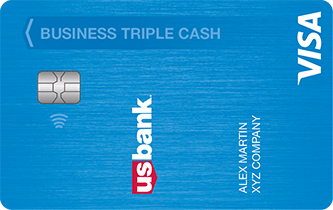

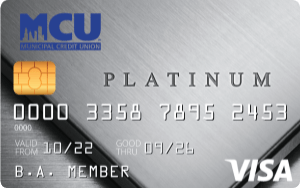


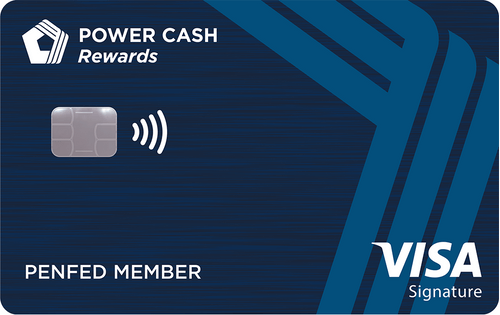

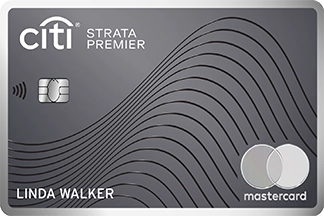

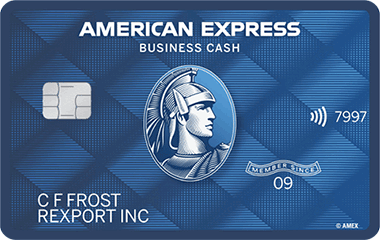


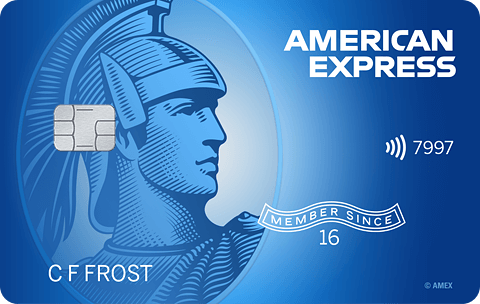


Total revolving limits 568220 (504020 reporting) FICO 8: EQ 689 TU 691 EX 682
Message 27 of 30
0
Kudos
Anonymous
Not applicable
- Mark as New
- Bookmark
- Subscribe
- Mute
- Subscribe to RSS Feed
- Permalink
- Report Inappropriate Content
02-21-2020
05:26 PM
02-21-2020
05:26 PM
Re: Which card(s) to get?
@FieryDance wrote:Since you are already at 4/24 (trust me, I know that position all too well
The advantage of this approach is you tie your short term goal (subs) with a long term goal (Chase eco system) together. You can still foray an easy business card sub on the side (make sure it is from a bank that does not report to your personal credit bureau therefore won't bring you to 5/24) whenever you see fit.
You could in theory build a similar portfolio with Amex MR cards but I do not recommend that because Amex MR cards that come worthy subs and rewards also come with exuberant annual fees.If you do not feel like being restricted to Chase just yet, I would go with a pure cashback approach. Given the cards you mentioned I would PC your Citi Rewards+ to DC, PC Amex CM to BCE, apply for US Bank Cash+ which will open door for AR, apply for BoA CR which has the potential up to 5.25% if you decide to use BoA later. I would add another easy sub, SavorOne seems a decent choice. I would not go for BCP because the rewards over BCE likely won't offset the AF for a single college student and you don't want to lose a once a life time Amex sub when you can't benefit from it the most.
Business cards are something I have thought about, specifically the Chase ones. Definitely need to do some more research on those. The Chase trifecta is enticing but not sure of the value of it in the future for me.
The cash back route is what I have been going for and I had originally thought about PC'ing to the BCE. It makes sense but then I would lose out on the sub. The $205 (after AF) sub plus the 6% would give me much more in the first year than a BCE would for years to come.
I feel that I'm more comfortable going for the BCP and Cash+ to get around $405 back in the first few months. I could hit a 3rd sub, but I figure it's best to wait.
Message 28 of 30
0
Kudos
Anonymous
Not applicable
- Mark as New
- Bookmark
- Subscribe
- Mute
- Subscribe to RSS Feed
- Permalink
- Report Inappropriate Content
02-21-2020
05:37 PM
02-21-2020
05:37 PM
Re: Which card(s) to get?
@Aim_High wrote:
@Anonymous wrote:
@Aim_High wrote:
@Anonymous wrote:I will be moving to college in July and will have expenses of around $3k during this time. So I figure this is a good time to hit some subs.
... You have two years until graduation, so it's time to garden long-term. Relax, the card game will still be here when you get done. Your needs will change a lot after graduation and you may find you want to go in a completely different direction. Wouldn't it be nice to be 0/24 so that you could qualify for whatever cards you wanted, regardless of how selective the lender? It's a great position to be in. I've been there many times in my life. If anything, gardening is vastly underrated.
Thank you for this. I just figure that since I'm going to be spending anyway, I may as well pick up a card I plan to get. I'll be paying for groceries and utilities for the first time, and those are both things I'll probably pay for forever. So both the BCE and Cash+ have lots of long term value and would allow me to save some money.
Would it be a bad idea to get just one of them? By the time I graduate I'd still be 0/24.
I think your idea to refinance your DCU auto loan to a lower APR should be a much higher priority than another card right now. That's a smart choice that could save you a lot more money than a SUB and/or card rewards, depending on the loan. And apping for new cards may diminish the value you get from refi if you do not still qualify for the lowest APR. If you decide on a new card, I'd do the auto refi first.
I honestly think you don't need another card right now. Once the dust settles, you'll have a CITI DC for 2% and the BCP downgraded to BCE is only 3% on groceries, so you'd be getting an additional 1% of spend. Have you calculated that value difference on estimate spend? However, I assume you're just buying for yourself, not a family of six, so your spend level probably doesn't indicate a need for the absolute best grocery card right now. There are also people who get a Target Red Card or Walmart card to buy groceries and get 5% back, so you'd actually be beating the BCP regular 4.4%* rate if that pattern works for you (See my note below.) I don't believe AMEX Blue Cash cards allow the grocery rate on discount stores like Target and Walmart, only at grocery chain stores which dilutes your savings since their prices are higher.
However, with only two new cards in the past 12 months (plus your auto loan), I think with your data points you'd be approved for another card if you decide to try that route. If I were to choose between a grocery card (BCP/BCE) or utilities card (Cash+), offhand I would imagine the grocery card would be much more valuable to you. Utilities on a small to medium apartment may easily be less monthly spend than your weekly grocery bill, but that depends on a lot of factors.
(*You mentioned 6% groceries on BCP; just keep in mind that if you were to spend the full $6K cap on 6% groceries, and then accounted for the $95 AF, your maximum actual return is only 4.4%, not counting the 6% on streaming services. And your return drops for every dollar less than or more than precisely $6K of spending.)
I do agree and that's my plan at this point. I'll be applying for the refi before any cards. I'm wondering though, should I refi soon, then wait a couple months to get a card? Or should I do the refi just before the new card, so that (maybe) the new account wouldn't be showing yet?
I did just get the Target debit card for the 5%, but I won't be doing all my grocery shopping there. I think the BCP will be worth it for the $200 and the future value. Say I spend just $300 a month on groceries on the BCE (downgraded from BCP) for 2 people after college, I'm getting $144 back in a year vs $96 from a 2% card. While it doesn't seem like much, I see that extra $48 as 1-2 free tanks of gas or a free dinner. The Cash+ offers much more than just utilities as well, for any electronics, furniture, clothing, and other purchases I may have.
Message 29 of 30
0
Kudos
Anonymous
Not applicable
- Mark as New
- Bookmark
- Subscribe
- Mute
- Subscribe to RSS Feed
- Permalink
- Report Inappropriate Content
02-21-2020
05:49 PM
02-21-2020
05:49 PM
Re: Which card(s) to get?
@SouthJamaica wrote:
@Anonymous wrote:Hi all, I will be moving to college in July and will have expenses of around $3k during this time. So I figure this is a good time to hit some subs. However, I am very conflicted about which cards I want to go for. I will be applying for them around the end of May/beginning of June. Also do want to note, I'm looking to refinance my DCU auto loan again. It's currently at 3.49% but they lowered it and so I'd like to get it down to 2.49%. Not sure how much this will effect my plans or when I should apply for it though.
These are my current cards:
Discover it: Opened Oct 10, 2017 and limit of $4,400
Amex Cash Magnet: Opened Jan 14, 2019 and limit of $9,900
Chase Freedom: Opened Jan 24, 2019 and limit of $2,500
Wells Fargo Propel: Opened April 4, 2019 and limit of $6,000
Citi Rewards+: Opened July 2, 2019 and limit of $3,400 (pc to double cash in July)
Auto loan was opened Oct 22, 2019
This leaves me at 4/24, with my planned future cards:
US Bank Cash+
BofA Cash RewardsAmex BCE/BCP
C1 Savor One (low priority)
Here are my stats:
FICO Score: 731 TU (Discover), 747 EX, EQ is somewhere between those
Utilization: 2%, will probably go AZEO
Inquiries: 2 on TU and EQ, 4 on EX
No derogatories or late payments
Age: Average is 1.4 years, oldest is 2.6 years
8 total accounts, 2 closed- one a gas cc, other was self lender loan, both with perfect payments
That leads me to my options. I can get a US Bank Cash+ and a BCP for a net return of around $405 on $1500. I will probably be spending $1k in the 5% categories on the Cash+ so that will get me an extra $50. Another option is to get those two plus a BofA Cash Rewards for a total of $605 on $2500 spend. I have no problem doing this but I'm not sure if it's a good idea. It would leave me with 8 credit cards, which I can handle, but that's 2 more apps when I already need 5. Also not sure if any creditors will get worried, especially with the auto loan and the possibility of a landlord checking my credit.
I could also get 1 or 2 of these, then get the others a couple of months later or whenever I want the extra cash. This honestly sounds like the best choice as I'm writing it.
The last option, which is why I'm thinking so much, is to get the Chase Sapphire Preferred. It will give me 60k points on $4k spend which will be a little tougher but should be no problem organically. It makes it easier just getting one card and will give me about $545 just for a statement credit. At 2 cents a point, it could be worth $1,200. But the only traveling I will be doing is back home. I'm not sure if I will even need to pay for this and it wouldn't be that often since I'm basically moving across the country. I will have an apartment, pets, car, etc so I can't leave that much. If I don't get it, I could get the sub in 2 years when I graduate, during which I might be actually traveling more. I was "already approved" for the CSP with a $6k limit a month ago but that's no longer showing.
I also like to see a discount after a buy everything I need and if I just save the points then I don't get the satisfaction. Also, this card would be useless to me after the sub. I'd change it to a Freedom after a year and then maybe just cancel it. The other cards will be kept and can be used every month.
Any advice is helpful!
IMHO you have more than enough good quality rewards cards, and should just chill.
I don't see a compelling reason to add any of the cards you mention adding, and I don't see why you should keep hammering your credit scores, as opposed to letting them grow.
Also, I don't see a compelling case for refinancing your auto loan, which will hammer your scores in multiple ways.
Well I'm not quite sure what a compelling reason would be then. Hear me out. First, getting a new card. I'm already spending the money, so why not spend less if I have the opportunity to do so? Getting the bonus will let me do that. Also, I will then have a card that I plan to get anyway. Except by the time I need a mortgage, this card will be aged longer with more history and on time payments.
Secondly, the refi. I've calculated the specifics, and by going down to 2.49% I'd save around $300 over the life of the loan as well as paying $30 less a month. That extra $30 is actually a big deal as a college student, and will give me more room to spend on others things I need. Although I plan to pay this off much faster once I graduate and get a better job, so this doesn't matter as much. But I figure paying less in interest over the next 2 years, while paying less per month, is certainly helpful.
Message 30 of 30
0
Kudos
† Advertiser Disclosure: The offers that appear on this site are from third party advertisers from whom FICO receives compensation.