- myFICO® Forums
- FICO Scoring and Other Credit Topics
- Personal Finance
- Chase for a one stop shop. Mistake?
Options
- Subscribe to RSS Feed
- Mark Topic as New
- Mark Topic as Read
- Float this Topic for Current User
- Bookmark
- Subscribe
- Mute
- Printer Friendly Page
Turn on suggestions
Auto-suggest helps you quickly narrow down your search results by suggesting possible matches as you type.
Showing results for
Chase for a one stop shop. Mistake?
Is your credit card giving you the perks you want?
Browse credit cards from a variety of issuers to see if there's a better card for you.
- « Previous
-
- 1
- 2
- Next »

- Mark as New
- Bookmark
- Subscribe
- Mute
- Subscribe to RSS Feed
- Permalink
- Report Inappropriate Content
10-10-2022
12:48 PM
10-10-2022
12:48 PM
Re: Chase for a one stop shop. Mistake?

Oh and this summer I was in the process of buying a investment property, wired $500k from IBKR and Citi they threatened to freeze my account indefinitely if I didn't show where the money came from and a big explanation of what I planned on doing with the money
Message 11 of 19

Anonymous
Not applicable
- Mark as New
- Bookmark
- Subscribe
- Mute
- Subscribe to RSS Feed
- Permalink
- Report Inappropriate Content
10-10-2022
12:53 PM
10-10-2022
12:53 PM
Re: Chase for a one stop shop. Mistake?
@SouthJamaica wrote:
@juicebox83 wrote:I currently use Alliant for my personal checking account but everything else is at Chase and Amex - Business checking, business CC, personal credit cards, and investments.
I also have accounts with First Republic, Schwab, Navy Federal, and a few others that I don't really use anymore and I'd love to close.
I know that banks like First Republic and Schwab Bank, alongside credit unions like NFCU and Alliant, get great reviews for customer service and features.
But convenience wise, consolidating to Chase for personal checking and closing all the others (except maybe NFCU) would really simplify finances for me. I'd like to have two, maybe max three apps / accounts.To put things in perspective I'm late 30s. Applying for a mortgage next year but will likely use a broker. Biggest thing I look for in a checking account is ATM refunds but the Chase account will have that.
appreciate any advice!
I'm not one for "one-stop" banking, because I simply don't trust banks.
Like @Jeffster1 and @GZG I'm for diversity in banking.
AMEND 
Message 12 of 19


- Mark as New
- Bookmark
- Subscribe
- Mute
- Subscribe to RSS Feed
- Permalink
- Report Inappropriate Content
10-10-2022
01:35 PM
10-10-2022
01:35 PM
Re: Chase for a one stop shop. Mistake?
@Creditplz Oh wow. You got all of that with CPC? You've convinced me to keep my personal banking with Alliant and maybe move my business banking to Amex or First Republic...
In the meantime, maybe I'll just keep the Chase checking account for the free wires and ATM fees... keep maybe $1000 in it.
Message 13 of 19

- Mark as New
- Bookmark
- Subscribe
- Mute
- Subscribe to RSS Feed
- Permalink
- Report Inappropriate Content
10-10-2022
06:43 PM
10-10-2022
06:43 PM
Re: Chase for a one stop shop. Mistake?
@juicebox83 wrote:@Creditplz Oh wow. You got all of that with CPC? You've convinced me to keep my personal banking with Alliant and maybe move my business banking to Amex or First Republic...
In the meantime, maybe I'll just keep the Chase checking account for the free wires and ATM fees... keep maybe $1000 in it.
I like Chase for business banking.




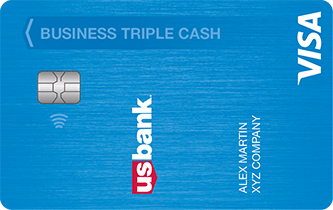

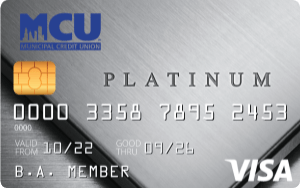
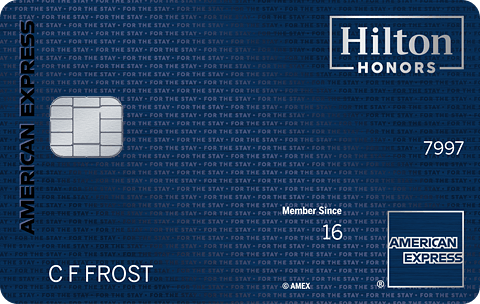



Total revolving limits 568220 (504020 reporting) FICO 8: EQ 689 TU 691 EX 682
Message 14 of 19
0
Kudos

- Mark as New
- Bookmark
- Subscribe
- Mute
- Subscribe to RSS Feed
- Permalink
- Report Inappropriate Content
10-11-2022
10:40 AM
10-11-2022
10:40 AM
Re: Chase for a one stop shop. Mistake?
It might help to think of banks in terms of roles.
At the center, it helps to have a hub account. A hub account should have high limits and easy transfers, allowing you to move money between your other accounts with minimal fuss. Chase or most of the big banks work well for that -- if you have enough money in their acconts. Because they often treat you very differently if you have significant assets parked with them. The bigger, more reliable, and more established online banks also tend to work well, and are friendlier to those who are younger and have fewer assets. Credit unions are often iffy in this regard, because they frequently have lower limits, restrictions (like NFCU's push vs. pull) or even attach fees to things like ACH transfers (one of my local credit unions does this). Always dig into the details. Some of the investment banks, like Schwab or Fidelity, have money management accounts that would probably work well. (I haven't used them for this.)
Then there's a place to stash your cash. This can be an emergency fund, a down payment, reserves, or just money that hasn't been invested. This isn't working money, so a savings or money market account (or even a CD with flexible withdrawal rules) with limited withdrawals per month is usually fine. A high APR is enticing, but honestly it's not the most important thing. No matter the rate, you still lose real value over time. I'm not going to rate chase, or play with the accounts that give a high APR but only for the first couple thousand dollars; it's too much nuisance for too little return. Having a bucket system where money can be segregated for different purposes can also be useful. More than any other account, make sure it's FDIC or NCUA insured.
Then there's a local bank. This is where you get the certified checks that are occasionally required, money orders, coins; and make physical deposits of things like cash. It's also where you can talk to a person face to face, which can be important for businesses and certain loans. Credit unions are a good choice, because they tend to have the best rates and focus on customer service. Large banks with a national presence can also be useful for those who travel frequently. Regional or local banks may also serve this role.
I generally like to keep one primary transaction account. This is typically a checking account, and will typically have some extra money in it for cash flow purposes. This is where ACH withdrawals, bill pay, credit card payments, checks, debit card transactions, and so on are typically made.
Any of the above can be combined. For instance, my hub account is also where I keep excess cash. But I definitely agree with all the posters about diversity. I don't want to lose access to everything, just because someone stole my identity and all my accounts at a bank got locked, for instance. So I have a backup (several, actually). The backup doesn't have to be as good, but I want it to be able to provide the same basic services. Additional bank accounts are also fine, but I also share the urge to simplify. So I try to ensure additional accounts serve a specific purpose. With those extra accounts, I'm careful about inactivity fees, balances, and account minimums. (I want to be able to ignore them for months, and not have to worry.)
Business accounts shouldn't be combined with any of the above, even if they're hosted at the same institution. Firewall them.
I tend to keep my investment accounts separate, but that's not a necessity. Just don't put them all in one basket, either.
Message 15 of 19

- Mark as New
- Bookmark
- Subscribe
- Mute
- Subscribe to RSS Feed
- Permalink
- Report Inappropriate Content
10-18-2022
01:19 AM
10-18-2022
01:19 AM
Re: Chase for a one stop shop. Mistake?
@juicebox83 wrote:I am "Chase Private Client" with Chase, whatever that means, but it does also offer the ATM refunds plus free outgoing wire transfers, etc. I do wires from time to time and that's why I like that feature.
What that means is that you either have an average balance over $150,000, you have a waiver, or you are paying $35 a month for the service.
It might be worth it to you, but you should understand what it means, and what it costs.
Message 16 of 19
0
Kudos
- Mark as New
- Bookmark
- Subscribe
- Mute
- Subscribe to RSS Feed
- Permalink
- Report Inappropriate Content
10-18-2022
10:20 PM
10-18-2022
10:20 PM
Re: Chase for a one stop shop. Mistake?
I prefer Citigold Private Client... feels more geared towards business clients and their services are actually kinda handy...
I just listed my house last week and I was telling my banker a month before, they offered me a free appraisal by someone they have contracted. And they send me gifts on my bday 🤣
Message 17 of 19
0
Kudos
- Mark as New
- Bookmark
- Subscribe
- Mute
- Subscribe to RSS Feed
- Permalink
- Report Inappropriate Content
10-19-2022
05:21 PM
10-19-2022
05:21 PM
Re: Chase for a one stop shop. Mistake?
@ThomasJNewton I have the 150k so I'm not paying fees, fortunately!
Message 18 of 19
0
Kudos
- Mark as New
- Bookmark
- Subscribe
- Mute
- Subscribe to RSS Feed
- Permalink
- Report Inappropriate Content
10-20-2022
08:33 AM
10-20-2022
08:33 AM
Re: Chase for a one stop shop. Mistake?
@juicebox83 wrote:thank you. You've convinced me all that I should keep at least one spare, but I don't need five spares right?
Which leads me to figuring out which ones to close. Do I keep the Navy Federal checking because everybody says that's the best credit union? Do I keep the First Republic account given that it normally has a $3500 minimum but they added a waiver for me years ago they no longer offer? I hear First Republic has great rates on personal lines of credit which maybe I'll want down the road. Do I keep the Schwab checking since that could be a good backup for no ATM fees? What about Alliant?
Keeping all these accounts open with $1 in them seems like more trouble than it's worth.
I have no experience with Schwab or First Republic, but I like Navy and Alliant a lot, and would never close them.
Total revolving limits 568220 (504020 reporting) FICO 8: EQ 689 TU 691 EX 682
Message 19 of 19
0
Kudos
† Advertiser Disclosure: The offers that appear on this site are from third party advertisers from whom FICO receives compensation.