- myFICO® Forums
- Types of Credit
- Credit Cards
- Issuer Analysis #1: Chase
Options
- Subscribe to RSS Feed
- Mark Topic as New
- Mark Topic as Read
- Float this Topic for Current User
- Bookmark
- Subscribe
- Mute
- Printer Friendly Page
Turn on suggestions
Auto-suggest helps you quickly narrow down your search results by suggesting possible matches as you type.
Showing results for
Issuer Analysis #1: Chase


Is your credit card giving you the perks you want?
Browse credit cards from a variety of issuers to see if there's a better card for you.

- Mark as New
- Bookmark
- Subscribe
- Mute
- Subscribe to RSS Feed
- Permalink
- Report Inappropriate Content
02-14-2026
01:32 PM
02-14-2026
01:32 PM
Issuer Analysis #1: Chase
I am starting a series of the 12 Biggest Credit Card Issuers starting with Chase.
1. Chase
Chase is currently the largest credit card issuer in the United States, with approximately 114 million cards in circulation and roughly 17%+ purchase market share.
Aside from Freedom Flex and some co-branded cards, majority of Chase Cards are Visa.
Product Overview
Secured Card: None
No Rewards/ Low Interest: Slate
Starter Card: Freedom Rise
Cash Back: Freedom Unlimited, Freedom Flex
Hotel Co-Brands: Marriott, IHG, Hyatt
Airline Co-Brands: United, Southwest
Retail Co-Brands: Amazon
Ultimate Rewards: Sapphire Preferred ($95 AF), Sapphire Reserve ($795 AF)
Ultra-Luxury: JP Morgan Reserve (invite-only)
Business: Ink Cash, Ink Unlimited, Ink Preferred, Ink Premier, Sapphire Reserve for Business
Rewards Program: Ultimate Rewards
Chase’s greatest strength is its Ultimate Rewards ecosystem.
While many issuers offer cash back or points, Chase is unique in how its system integrates:
- Freedom cards earn Ultimate Rewards points 1cpp or Cash Back
- When paired with a Sapphire card, those points can transfer to Airline or Hotel Partners. Depending on the transfer partner, which makes it more than 1cpp. From what I’ve read, it can go as high as 3-5cpp.
The Chase Trifecta or Quadfecta:
- Choose 2-3 of the following: Freedom Unlimited, Freedom Flex, Ink Preferred (Business)
- Choose 1 of the following: Sapphire Preferred or Sapphire Reserve
For example:
- Freedom Unlimited earns 1.5% cash back (3% on dining)
- With a Sapphire card, that 1.5 Ultimate Rewards points can be transferred to Airline or Hotel partners or redeemed at elevated value. If it’s 3cpp. Then that 1.5 points that was worth 1.5 cents is now worth 4.5 cents.
On its own, 1.5% on the Chase Freedom Unlimited may seem average (many cards offer 2% flat cash back).
Chase Freedom Unlimited Flat Cash Back (No-AF) Competitors:
- 1.5% Cash Back: Capital One QuickSilver, Bank of America Unlimited Cash (Can increase to 2.625%)
- 2% Cash Back: Wells Fargo Active Cash, US Bank Smartly (can increase), Navy FCU Cash Rewards Plus, Fidelity Rewards (Elan), FNBO Evergreen, Synchrony Premier, Bread Cashback
With the ability to transfer UR to Airline Partners, when the Chase Freedom unlimited is paired with Sapphire, it becomes a more attractive card.
In 2020, Chase Freedom Unlimited adds 3% back on Dining and Drugstores, so Chase cardholders can have 3% categories without having to use another card. This makes this a hybrid and not just a straight 1.5% flat cash back.
Chase Freedom Unlimited 3% Dining (Restaurants) No-AF Competitors
- 3% - Capital One Savor, Wells Fargo Autograph, Navy FCU More Rewards, Mission Lane Gold, Bank of America Customized Cash (Can Increase to 5.25%) If dining is chosen Category, Bread Rewards (Can go up to 3.75%)
- 4% - US Altitude Go (Points not Cashback)
- 5% - Citi Custom Cash (5%) If Dining is Chosen Category
Chase Freedom Flex direct competitor is Discover IT with its 5% rotating categories.
Chase Sapphire Preferred ($95, Metal) direct competitors (Travel Portal and Partner Transfers) are:
- American Express Green ($150, Plastic) Amex Gold ($325, Metal) (Membership Rewards)
- Citi Strata Premier ($95, Plastic) (Thank You Rewards)
- Capital One Venture ($95, Metal) (CapitalOne Miles)
One unique feature of Chase Sapphire Preferred is that it offers Primary ($60K) not Secondary Car Insurance, which is unique for a Visa Signature Card. American Express offers the ability to purchase coverage for a flat rate $19.95 - $24.95 ($75-100K)
Chase Sapphire Preferred ($795) direct competitors (Airport Lounge and Partner Transfer, metal cards) are:
- American Express Platinum ($895) (Membership Rewards)
- Citi Strata Elite ($550) (Thank You Rewards)
- Capital One Venture X ($395) (CapitalOne Miles)
Both Chase Sapphire Reserve and Capital One Venture X are Visa Infinite and offer Primary Insurance ($75K). Citi Strate Elite offers Primary Insurance outside the US, Secondary when in US. American Express offers the ability to purchase coverage for a flat rate $19.95 - $24.95 ($75-100K)
Quirks: The 5/24 Rule
Chase is known for its 5/24 rule.
If you have opened 5 or more personal credit cards (from any issuer) in the past 24 months, Chase will typically deny you for most of its cards even if you have excellent credit, strong income and low utilization. This policy is one of the most important strategic considerations when planning to add Chase cards to your credit card portfolio.
Why Chase Became So Popular
Popular Cards: (Chase Trifecta Cards) Chase Sapphire Reserve, Chase Sapphire Preferred, Chase Freedom Unlimited, Chase Freedom Flex.
High SUB with Chase Sapphire Reserve and Chase Sapphire Preferred.
Chase Sapphire Reserve alternative to American Express Platinum for Airport Lounges and Travel Perks, status upgrades.
Marketing and Branding with the Chase Sapphire.
Fun Fact: While American Express introduced the metal Centurion Card in 1999, the Amex Gold and Platinum were plastic until 2018 and 2019. Chase Sapphire Preferred released it’s metal design in 2011. The Chase Sapphire Reserve was launched with metal design in 2016. You start to see other premium cards follow suit (Citi, Amex, Capital One) While largely a cosmetic feature, the shift to metal cards highlights how powerful premium design can be in marketing higher-end financial products.
Metal Cards (You can see how Chase's marketing shifted the industry, Especially now with Capital One Venture X and Citi Strata)
- 1999 – American Express Centurion launched in Metal
- 2011 – Chase Sapphire Preferred redesign with Metal
- 2016 – Chase Sapphire Reserve launched in Metal
- 2017 – Chase Amazon refreshed launched in Metal
- 2017 – Citi AA Advantage Executive refreshed to Metal
- 2018 – Amex Gold redesign to Metal Card
- 2018 – Capital One Venture refresh to Metal Card
- 2019 – Amex Platinum redesign to Metal Card
- 2019 – Apple Card launched in Titanium
- 2019 – Chase United Club Refreshed in Metal
- 2020 – Amex Delta Platinum redesigned to Metal Card
- 2021 – Capital One Ventue X Card launched in Metal Card
- 2024 – US Bank Smartly launched in Metal Card
- 2024 – Robin Hood launched in Metal Card
- 2025 – Citi Strata Elite launched in Metal Card
Key timeline moments for Chase:
- 2006 – Chase Freedom launches
- 2009 – Chase Sapphire launches $0 AF
- 2009 – Chase Sapphire Preferred $95 AF
- 2011 - Chase Sapphire Preferred changes to Metal Card
- 2016 – Freedom Unlimited introduces 1.5% cash back
- 2016 – Sapphire Reserve launches at $450 annual fee
- 2017 – Chase Amazon Refresh 5% Back
- 2020 – Sapphire Reserve increases to $550 AF
- 2020 – Freedom Unlimited adds 3% on dining & drugstores
- 2020 – Freedom Flex launches
- 2022 – First Chase Sapphire Lounge opens
- 2026 – Sapphire Reserve increases to $795 AF
- 2026 – Chase becomes new issuer of Apple Card
The 2016 launch of the Sapphire Reserve dramatically reshaped the premium travel card market and intensified competition across issuers.
Personal Experience & Observations
One of my earliest credit cards was with Washington Mutual in 2007. When Chase acquired WaMu, my account was converted to Chase Slate. Later, I product changed it to Freedom Unlimited. In 2017, I opened a Chase Business Ink. In 2022, I defaulted with Chase. When I defaulted on one account, Chase closed the other.
A lot of people talk about the Chase Trifecta to maximize, but people that want to keep it simple stick with using one card like the Chase Sapphire Preferred. The commonly talked about hotel transfer partner is Hyatt.
Family Member who travels a lot. He banks his points and only redeems them when hotel prices are high—such as in popular destinations or during peak travel seasons. When nightly rates are low, he pays cash. By doing this, he ensures he’s redeeming points when the cost per night is elevated, effectively maximizing his cents-per-point (CPP) value.
Friends who travel occasionally. They focus on earning large sign-up bonuses and then maximize those points through transfer partners, hotel programs, and creative upgrades. Rather than using points casually, they plan a major trip well in advance. By staying flexible with dates and researching redemption options, they’re able to stretch their rewards and enjoy upgraded flights or hotels at a discount.
Tl;dr: Chase's flagship line is Sapphire. When choosing an ecosystem (Amex, Chase, Capital One, Citi), it's best to look at the partners you will use most. One size does not fit all, especially with airline partners depending on your departure and arrival cities. Chase is great with Customer Service, CLI and for other financial products. Remember the 5/24 rule, if you plan on adding a Chase credit card to your collection.
Primary Cards (2024-Present):



Occasional-Use Cards (2024 - Present)


Credit Rebuilder Cards - $7.4K (2023 - Present):
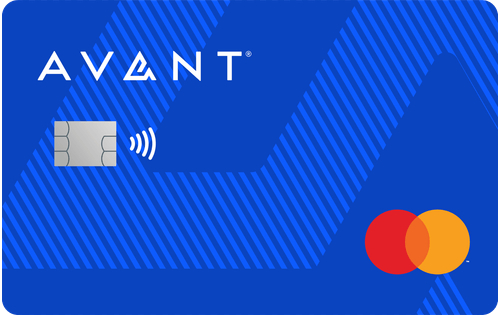





Closed - Settled (2007-2022):
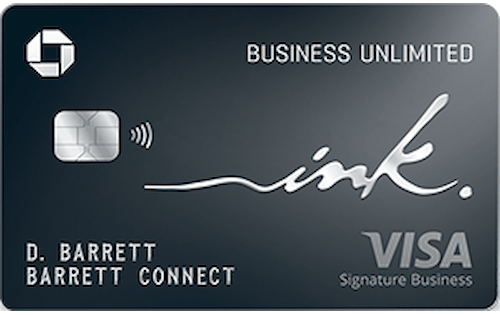
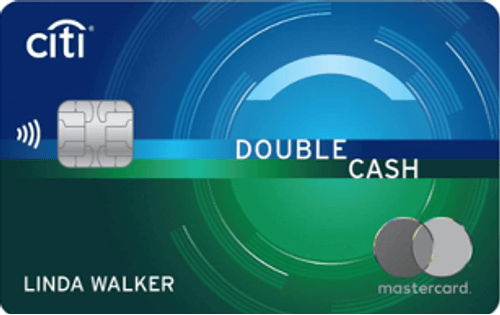

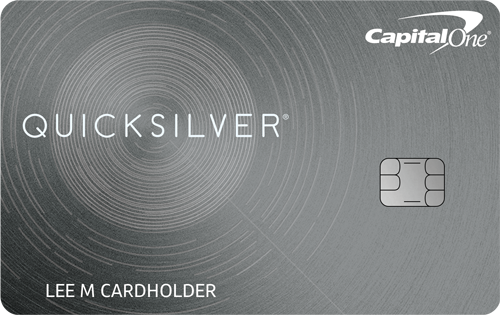
Closed - Good Standing (2009-2019):
Rebuild Start: 07/23 | Settlements Complete: 03/25
New Accounts: 2/6, 5/12, 7/24
FICO 8 7/23:
FICO 8 3/24:


FICO 8 3/25:


FICO 8 3/26:


FICO 8 5/26:


Occasional-Use Cards (2024 - Present)
Credit Rebuilder Cards - $7.4K (2023 - Present):
Closed - Settled (2007-2022):
Closed - Good Standing (2009-2019):
Rebuild Start: 07/23 | Settlements Complete: 03/25
New Accounts: 2/6, 5/12, 7/24
FICO 8 7/23:
FICO 8 3/24:
FICO 8 3/25:
FICO 8 3/26:
FICO 8 5/26:
Labels:
Message 1 of 1
† Advertiser Disclosure: The offers that appear on this site are from third party advertisers from whom FICO receives compensation.