- myFICO® Forums
- Types of Credit
- Credit Card Approvals
- Re: Penfed PCR Approval
Options
- Subscribe to RSS Feed
- Mark Topic as New
- Mark Topic as Read
- Float this Topic for Current User
- Bookmark
- Subscribe
- Mute
- Printer Friendly Page
Turn on suggestions
Auto-suggest helps you quickly narrow down your search results by suggesting possible matches as you type.
Showing results for
Penfed PCR Approval


Is your credit card giving you the perks you want?
Browse credit cards from a variety of issuers to see if there's a better card for you.
- « Previous
- Next »

- Mark as New
- Bookmark
- Subscribe
- Mute
- Subscribe to RSS Feed
- Permalink
- Report Inappropriate Content
01-30-2020
01:28 PM
01-30-2020
01:28 PM
Re: Penfed PCR Approval
@M_Smart007 wrote:
@Aim_High wrote:
@Anonymous wrote:
@Aim_High wrote:
@Anonymous wrote:
@Aim_High wrote:
@M_Smart007 wrote:
@Anonymous wrote:Now remember to request a credit limit increase close to, but not past 90 days.
My PCR went from $1000---> $18,500 on day 85 without an additional HP.
That is impressive!
Yes it is!! Very much so!!
I didn't know they would approve a CLI less than 90 days!
And so are you saying that they will approve one within 90 days using the original HP?
But if you go over 90 days, it's another HP?
This is great advice for me also.
This is how it worked 2-ish years ago. But as always with HPs, expect the worst and hope for the best! YMMV
Thanks! I just checked my PenFed login and there isn't anywhere to request a CLI that I see.
Does it appear when you are eligible or did you have to call them and have CSR do it?
It's a little cryptic. Once you're logged in, go to "Products and Rates" and find the credit card you have. Instead of saying "apply now" it should have an option for Request Line Increase beside products you already have.
The status from there can then be monitored in "Applications." Not sure if they ever do instant increases, but mine never have been.
Ahhh ... there it is. I found it. Thanks!
Anyone know PenFed's rules on how close-together you can open new cards?
Not sure if I want to, but just curious.
I believe @FinStar or @coldfusion could best answer that question

Thanks for the tag @M_Smart007.
Back in the day (we're talking circa ~2016 when PenFed was a bit more laxed) one could open another CC product as early as 4 months from the last approval. That said, their UW policies used to be a bit more liberal which included the ability of recycling the same HP within a 90-day window. The recycling is pretty much out the window and is seldomly seen these days plus more of YEMV for some profiles.
I wouldn't attempt another CC with them for at least 12 months, unless the profile is pretty solid (absent of much activity in such timeframe) for optimal results...and whether there's a value in the product itself.
Message 21 of 30

Anonymous
Not applicable
- Mark as New
- Bookmark
- Subscribe
- Mute
- Subscribe to RSS Feed
- Permalink
- Report Inappropriate Content
01-30-2020
02:35 PM
01-30-2020
02:35 PM
Re: Penfed PCR Approval
Congrats on your approval.
Message 22 of 30

- Mark as New
- Bookmark
- Subscribe
- Mute
- Subscribe to RSS Feed
- Permalink
- Report Inappropriate Content
01-30-2020
04:31 PM
01-30-2020
04:31 PM
Re: Penfed PCR Approval
Very Noice! This is the lender that haunts my dreams
Message 23 of 30

- Mark as New
- Bookmark
- Subscribe
- Mute
- Subscribe to RSS Feed
- Permalink
- Report Inappropriate Content
01-30-2020
05:28 PM
01-30-2020
05:28 PM
Re: Penfed PCR Approval
Congratulations on your approval

Message 24 of 30

- Mark as New
- Bookmark
- Subscribe
- Mute
- Subscribe to RSS Feed
- Permalink
- Report Inappropriate Content
01-30-2020
05:45 PM
01-30-2020
05:45 PM
Re: Penfed PCR Approval
Congrats!
Message 25 of 30
Anonymous
Not applicable
- Mark as New
- Bookmark
- Subscribe
- Mute
- Subscribe to RSS Feed
- Permalink
- Report Inappropriate Content
01-30-2020
05:55 PM
01-30-2020
05:55 PM
Re: Penfed PCR Approval
Congratulations
Message 26 of 30

- Mark as New
- Bookmark
- Subscribe
- Mute
- Subscribe to RSS Feed
- Permalink
- Report Inappropriate Content
01-31-2020
08:14 PM
01-31-2020
08:14 PM
Re: Penfed PCR Approval
Congrats on your new Penfed card
>3/2016 EX 644 CK-TU 642 CK-EQ 660 WalMart- 671.
>7/2025 All 3 reports 830 - 845(F8) F9s = all 850 but my app finger is still twitching
>7/2025 All 3 reports 830 - 845(F8) F9s = all 850 but my app finger is still twitching
Message 27 of 30

- Mark as New
- Bookmark
- Subscribe
- Mute
- Subscribe to RSS Feed
- Permalink
- Report Inappropriate Content
02-01-2020
09:39 AM
02-01-2020
09:39 AM
Re: Penfed PCR Approval
@Aim_High
What makes the PCR outshine the others in your estimation?
What makes the PCR outshine the others in your estimation?
Our credit card journey started 3/2018











Hover over cards to see limits and usage. Total CL - $608,600. Cash Back and SUBs earned as of 5/31/24- $21,590.43
CU Memberships


Goal Cards:



Hover over cards to see limits and usage. Total CL - $608,600. Cash Back and SUBs earned as of 5/31/24- $21,590.43
CU Memberships
Goal Cards:
Message 28 of 30
0
Kudos

- Mark as New
- Bookmark
- Subscribe
- Mute
- Subscribe to RSS Feed
- Permalink
- Report Inappropriate Content
02-01-2020
12:58 PM
02-01-2020
12:58 PM
Re: Penfed PCR Approval
@JNA1 wrote:
@Aim_High
What makes the PCR outshine the others in your estimation?
Thanks for asking.  Until August and November 2019, I had no 2% uncategorized cards until I added the GS Bank Apple card and the PenFed Power Cash. (The Apple card was more of an experiment but it's not really on this list since you only get 2% when using Apple Pay, which is not always available.) The PenFed Power Cash, however, was one I carefully targeted after comparing all the options.
Here are the all the major 2% cards I tried to evaluate, pretty much all the existing ones of which I am aware. Some of the smaller ones have more unknowns to me because they have less data available on the internet, to include less feedback from existing My Fico users. I discounted other high payout cards to include the US Bank Altitude Reserve, which like the Apple Card pays 3% but only on mobile payment, plus it has an AF and is not a good fit for people who don't travel. Also, the USAA Limitless Cash Back card is not on the list because the card is no longer available, not to mention USAA membership is selective. Also, even though I also have my eye on the Bank of America Premium Rewards card which can earn a high cash-back reward, it also requires Preferred Rewards status and large bank deposits that many people may not be able to afford. It's not a fair comparison.
Let me preface my comments. I'm not bashing any 2% cards besides the PenFed Power Cash. I just thought it was the best card for me at this time and was asked to explain why. (I may even try another one or two of these cards in the future.) Some of these other cards may work better for some people. For example, I know Citi DC is popular and they now allow TY points to be transferred from DC to other cards, which is a great reason to carry it. Some cards may also be easier for some people to be approved for, or perhaps they are with a lender you already have a relationship. So take my comments in perspective to your own situation.
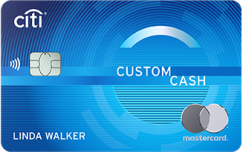
Citi Double Cash Visa
Fidelity Visa (Elan Financial Services)
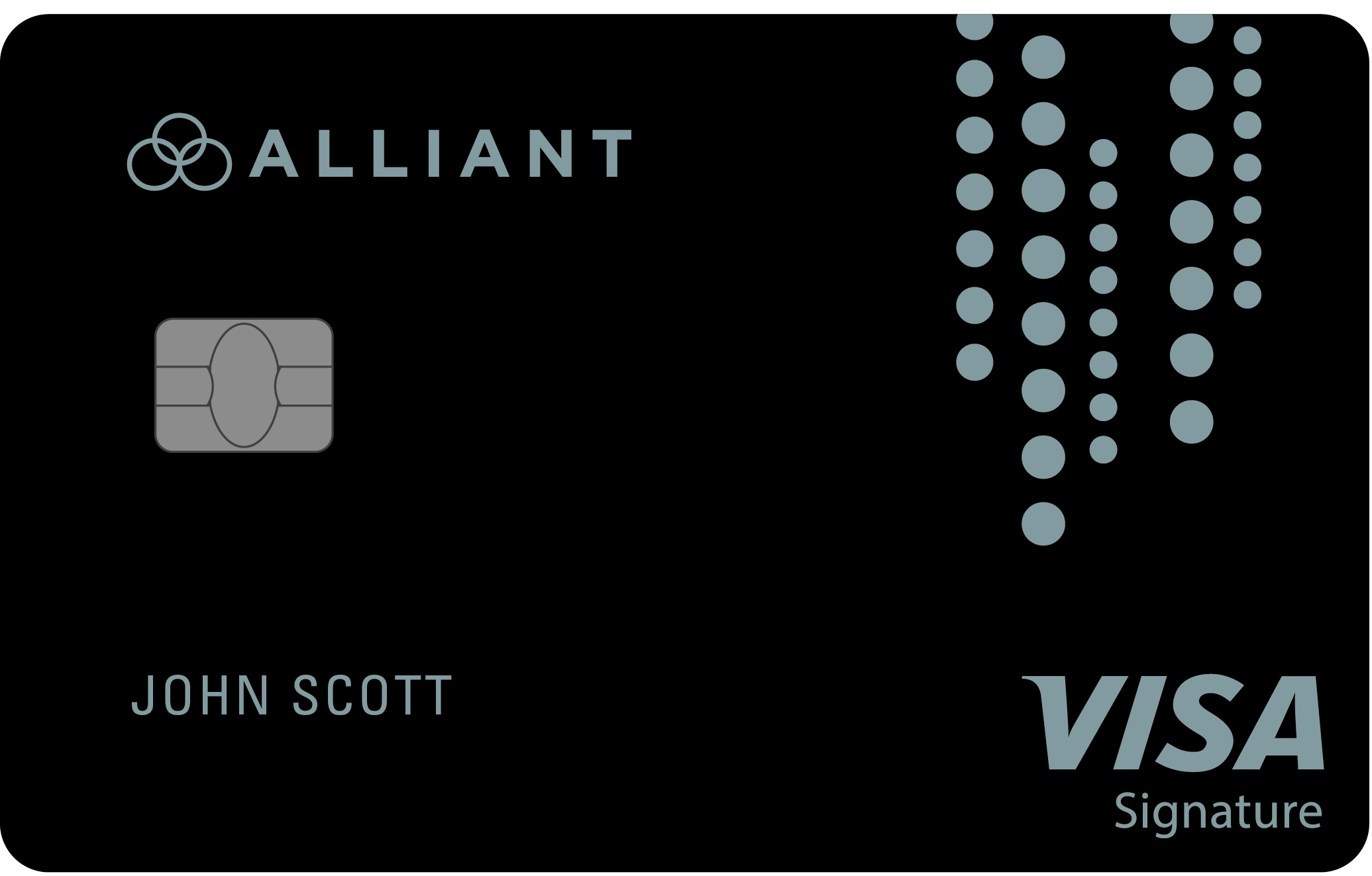
Alliant Platinum Visa Signature
PayPal Cashback Mastercard
PenFed Power Cash
Navy FCU Flagship Rewards
State Dept FCU Premium Cash Back +
BBVA Rewards Card
Randolph-Brooks FCU Cashback Rewards Visa
Pennsylvania State Employees CU (PSECU) Founder's Cashback Visa
Signature FCU Visa Signature
Key Bank Cashback Card
FNBO Cash Rewards Visa
Bank of Missouri Ollo Optimum Mastercard (invitation-only)
First off, geofencing or selective membership has to be a consideration. There are a few of these lenders that just anyone cannot apply. I know RBFUC is geofenced, although they were a consideration for me. Navy FCU membership requires military or family affiliation. FNBO is geofenced from what I've read, and don't believe Key Bank or BBVA issue cards in all 50 states either. Bank of Missouri Ollo is invitation-only and seems to be aimed at the subprime market or rebuilders. SDFCU is known to be conservative and sometimes hard to get your foot in the door. Yes, PenFed can be conservative on approvals also, but for average or better profiles, they seem accessible enough for most consumers.
Let's talk Rewards. Most people like myself prefer no games with their cash rewards and ability to redeem quickly. Unlike several of the other cards, PenFed's cash is available mid-month after the charges clear (like Capital One QS, if you have that), has no minimum cash redemption (starts at 0.01 cents), has no expiration as long as your account is open, can be redeemed for statement credit or bank deposit. In comparison, for example, Citi DC has several loopholes in Citi's favor, based on CITI's fine print and what I've read from other users. DC credits the first 1% at statement close, not at the time charges clear. DC credits the second 1% after payment. So you can be waiting a minimum of over 30 days for your money. Also, minimum redemption is $25 with DC, so you get paid once every $1250 of spend. One huge issue I have with DC is the fine print states that cash back "expires" at an egregious 12 months of inactivity on the card. Some card programs have expiring points, but 12 months is quite punitive IMO. There are other stipulations with other cards. For example, to get the full 2% on the Fidelity card, you must deposit the rewards into a Fidelity investment account. While you could redeem it for cash to use elsewhere, it's a cumbersome step. If you don't redeem to Fidelity, you get 1%. And both Navy FCU Flagship and Fidelity minimum redemption is a high $50. PayPal MC requires redemption through a PayPal account as an intemediary step toward deposit (or if I'm not mistaken, account credit?) But PPMC does allow redemption starting at a penny, like PenFed PC. In this category, PenFed seems the least "fuss" of the major 2% cards.
Let's talk fees and interest rates. I PIF monthly and have autopay setup to avoid late fees. But I also have been around long enough to know sometimes, life happens and I don't want to leave the opportunity for my lenders to take advantage of me if it does. So unlike some who say "it doesn't matter since I always PIF", to me it still does matter. PenFed's fees and interest charges are some of if not the absolute best of any of the 2% cash back cards. The APR is as low as 11.74%, awesome for a rewards card. Late payment fee starts at a reasonable $10 and is capped at $25. There is no AF and no FTF. BT Fees are a reasonable 3%. Cash Advance fees are 5% or $5, also very reasonable. I pay none of these, but nice to know they are low. CITI DC, meanwhile, starts APR at 15.49%, charges a 3% FTF, and up to $40 late fee. Synchrony's PayPal MC starts at a horrible 21.49% (even with excellent credit) and has a late payment fee of up to $39. Navy FCU Flagship also has a small $49 AF which must be accounted for in valuation.
Let's talk size, reputation, and customer service. Some of these cards are issued by smaller banks or credit unions that probably can't come close to offering the same level of customer service, fraud prevention, and overall access that a larger financial institution can do. PenFed is the 3rd largest CU in the US and has a good reputation for customer service, so I would put them on par with if not even superior to the larger banks in this regard. There have been some threads about customer service issues on some lenders, for example most recently some reported major problems dealing with Signature FCU. No credit card rewards program or high bank account interest earnings are worth having to suffer poor customer service.
Like most of these cards except CITI DC and PPMC, PenFed requires you to have some other sort of membership or account relationship to get their card. To join PenFed requires you to deposit $5 into a share account, typical of many credit unions. Many of these other lenders also require you to keep certain minimum balances or direct deposits to earn the full 2% on their cards. As former active duty military, I can get the PenFed Power Cash card as part of their "Honors Advantage" program which waives any account requirement to get my 2% cash back. But since I already made a $5 deposit to open my membership and they have attractive banking products so I have chosen to do some banking with them also. For non-military members, you must maintain an Access America checking account which normally carries a $10 monthly fee. However, that fee is waived with a small $500 average daily balance or a $500 monthly direct deposit, either of which is pretty easy for many people to do. So in my opinion, PenFed sets the bar as low or lower than other CU's when it comes to other requirements to get your 2% cash back without having to pay fees.
Let's talk technology. While PenFed isn't necessarily an industry leader, they do have a good dedicated website and banking app. I've heard complaints about some of the other programs, specifically the ability to access information on PPMC. I wonder about the technology support from the other smaller lenders I mentioned also.
Let's talk Balance Transfer Offers. Many of these cards dont' offer one at all, including PPMC. PenFed offers 0% for 12 months with a 3% fee; Citi does offer a slightly longer one - 0% for 18 months with a 3% fee. So PenFed is competitive in this regard. (This wasn't a prime consideration for me, however.)
Let's talk SUBs. Several of these cards don't have one, including the CITI DC or PPMC. I got a $100 SUB for my first $1500 spend on top of the 2%, so I effectively got an 8.66% cash-back return on my first $1500 spend. Icing on the cake.
All-in-all, it appears to me that PenFed Power Cash has the most going for it and I've been very pleased with my card so far. Hope this review helps.


Business Cards






Length of Credit > 42 years; Total Credit Limits > $947.1K
Top Lender TCL - Chase 156.4 - BofA 99.9 - CITI 97.5 - AMEX 95.1 - NFCU 80.0 - SYCH - 65.0
AoOA > 32 years (Jun 1993); AoYA (Oct 2024)
* Hover cursor over cards to see name & CL, or press & hold on mobile app.
Message 29 of 30
- Mark as New
- Bookmark
- Subscribe
- Mute
- Subscribe to RSS Feed
- Permalink
- Report Inappropriate Content
02-01-2020
08:21 PM
02-01-2020
08:21 PM
Re: Penfed PCR Approval
@Aim_High wrote:
@JNA1 wrote:
@Aim_High
What makes the PCR outshine the others in your estimation?Thanks for asking.
Here are the all the major 2% cards I tried to evaluate, pretty much all the existing ones of which I am aware. Some of the smaller ones have more unknowns to me because they have less data available on the internet, to include less feedback from existing My Fico users. I discounted other high payout cards to include the US Bank Altitude Reserve, which like the Apple Card pays 3% but only on mobile payment, plus it has an AF and is not a good fit for people who don't travel. Also, the USAA Limitless Cash Back card is not on the list because the card is no longer available, not to mention USAA membership is selective. Also, even though I also have my eye on the Bank of America Premium Rewards card which can earn a high cash-back reward, it also requires Preferred Rewards status and large bank deposits that many people may not be able to afford. It's not a fair comparison.
Let me preface my comments. I'm not bashing any 2% cards besides the PenFed Power Cash. I just thought it was the best card for me at this time and was asked to explain why. (I may even try another one or two of these cards in the future.) Some of these other cards may work better for some people. For example, I know Citi DC is popular and they now allow TY points to be transferred from DC to other cards, which is a great reason to carry it. Some cards may also be easier for some people to be approved for, or perhaps they are with a lender you already have a relationship. So take my comments in perspective to your own situation.
Citi Double Cash Visa
Fidelity Visa (Elan Financial Services)
Alliant Platinum Visa Signature
PayPal Cashback Mastercard
PenFed Power Cash
Navy FCU Flagship Rewards
State Dept FCU Premium Cash Back +
BBVA Rewards Card
Randolph-Brooks FCU Cashback Rewards Visa
Pennsylvania State Employees CU (PSECU) Founder's Cashback Visa
Signature FCU Visa Signature
Key Bank Cashback Card
FNBO Cash Rewards Visa
Bank of Missouri Ollo Optimum Mastercard (invitation-only)
First off, geofencing or selective membership has to be a consideration. There are a few of these lenders that just anyone cannot apply. I know RBFUC is geofenced, although they were a consideration for me. Navy FCU membership requires military or family affiliation. FNBO is geofenced from what I've read, and don't believe Key Bank or BBVA issue cards in all 50 states either. Bank of Missouri Ollo is invitation-only and seems to be aimed at the subprime market or rebuilders. SDFCU is known to be conservative and sometimes hard to get your foot in the door. Yes, PenFed can be conservative on approvals also, but for average or better profiles, they seem accessible enough for most consumers.
Let's talk Rewards. Most people like myself prefer no games with their cash rewards and ability to redeem quickly. Unlike several of the other cards, PenFed's cash is available mid-month after the charges clear (like Capital One QS, if you have that), has no minimum cash redemption (starts at 0.01 cents), has no expiration as long as your account is open, can be redeemed for statement credit or bank deposit. In comparison, for example, Citi DC has several loopholes in Citi's favor, based on CITI's fine print and what I've read from other users. DC credits the first 1% at statement close, not at the time charges clear. DC credits the second 1% after payment. So you can be waiting a minimum of over 30 days for your money. Also, minimum redemption is $25 with DC, so you get paid once every $1250 of spend. One huge issue I have with DC is the fine print states that cash back "expires" at an egregious 12 months of inactivity on the card. Some card programs have expiring points, but 12 months is quite punitive IMO. There are other stipulations with other cards. For example, to get the full 2% on the Fidelity card, you must deposit the rewards into a Fidelity investment account. While you could redeem it for cash to use elsewhere, it's a cumbersome step. If you don't redeem to Fidelity, you get 1%. And both Navy FCU Flagship and Fidelity minimum redemption is a high $50. PayPal MC requires redemption through a PayPal account as an intemediary step toward deposit (or if I'm not mistaken, account credit?) But PPMC does allow redemption starting at a penny, like PenFed PC. In this category, PenFed seems the least "fuss" of the major 2% cards.
Let's talk fees and interest rates. I PIF monthly and have autopay setup to avoid late fees. But I also have been around long enough to know sometimes, life happens and I don't want to leave the opportunity for my lenders to take advantage of me if it does. So unlike some who say "it doesn't matter since I always PIF", to me it still does matter. PenFed's fees and interest charges are some of if not the absolute best of any of the 2% cash back cards. The APR is as low as 11.74%, awesome for a rewards card. Late payment fee starts at a reasonable $10 and is capped at $25. There is no AF and no FTF. BT Fees are a reasonable 3%. Cash Advance fees are 5% or $5, also very reasonable. I pay none of these, but nice to know they are low. CITI DC, meanwhile, starts APR at 15.49%, charges a 3% FTF, and up to $40 late fee. Synchrony's PayPal MC starts at a horrible 21.49% (even with excellent credit) and has a late payment fee of up to $39. Navy FCU Flagship also has a small $49 AF which must be accounted for in valuation.
Let's talk size, reputation, and customer service. Some of these cards are issued by smaller banks or credit unions that probably can't come close to offering the same level of customer service, fraud prevention, and overall access that a larger financial institution can do. PenFed is the 3rd largest CU in the US and has a good reputation for customer service, so I would put them on par with if not even superior to the larger banks in this regard. There have been some threads about customer service issues on some lenders, for example most recently some reported major problems dealing with Signature FCU. No credit card rewards program or high bank account interest earnings are worth having to suffer poor customer service.
Like most of these cards except CITI DC and PPMC, PenFed requires you to have some other sort of membership or account relationship to get their card. To join PenFed requires you to deposit $5 into a share account, typical of many credit unions. Many of these other lenders also require you to keep certain minimum balances or direct deposits to earn the full 2% on their cards. As former active duty military, I can get the PenFed Power Cash card as part of their "Honors Advantage" program which waives any account requirement to get my 2% cash back. But since I already made a $5 deposit to open my membership and they have attractive banking products so I have chosen to do some banking with them also. For non-military members, you must maintain an Access America checking account which normally carries a $10 monthly fee. However, that fee is waived with a small $500 average daily balance or a $500 monthly direct deposit, either of which is pretty easy for many people to do. So in my opinion, PenFed sets the bar as low or lower than other CU's when it comes to other requirements to get your 2% cash back without having to pay fees.
Let's talk technology. While PenFed isn't necessarily an industry leader, they do have a good dedicated website and banking app. I've heard complaints about some of the other programs, specifically the ability to access information on PPMC. I wonder about the technology support from the other smaller lenders I mentioned also.
Let's talk Balance Transfer Offers. Many of these cards dont' offer one at all, including PPMC. PenFed offers 0% for 12 months with a 3% fee; Citi does offer a slightly longer one - 0% for 18 months with a 3% fee. So PenFed is competitive in this regard. (This wasn't a prime consderation for me, however.)
Let's talk SUBs. Several of these cards don't have one, including the CITI DC or PPMC. I got a $100 SUB for my first $1500 spend on top of the 2%, so I effectively got an 8.66% cash-back return on my first $1500 spend. Icing on the cake.
All-in-all, it appears to me that PenFed Power Cash has the most going for it and I've been very pleased with my card so far. Hope this review helps.
Excellent breakdown, Thank you! The PPMC's online site is the worst thing about it and is why I want to get at least one more 2% everyday card. For me not having a travel card at all, I think I'd choose the Flagship if I could only have, because the AR would easily be worth it for me. That said, I'd like to get a relationship with PenFed as well, and this is definitely the card of theirs I want to get.
Our credit card journey started 3/2018
Hover over cards to see limits and usage. Total CL - $608,600. Cash Back and SUBs earned as of 5/31/24- $21,590.43
CU Memberships
Goal Cards:
Hover over cards to see limits and usage. Total CL - $608,600. Cash Back and SUBs earned as of 5/31/24- $21,590.43
CU Memberships
Goal Cards:
Message 30 of 30
† Advertiser Disclosure: The offers that appear on this site are from third party advertisers from whom FICO receives compensation.